
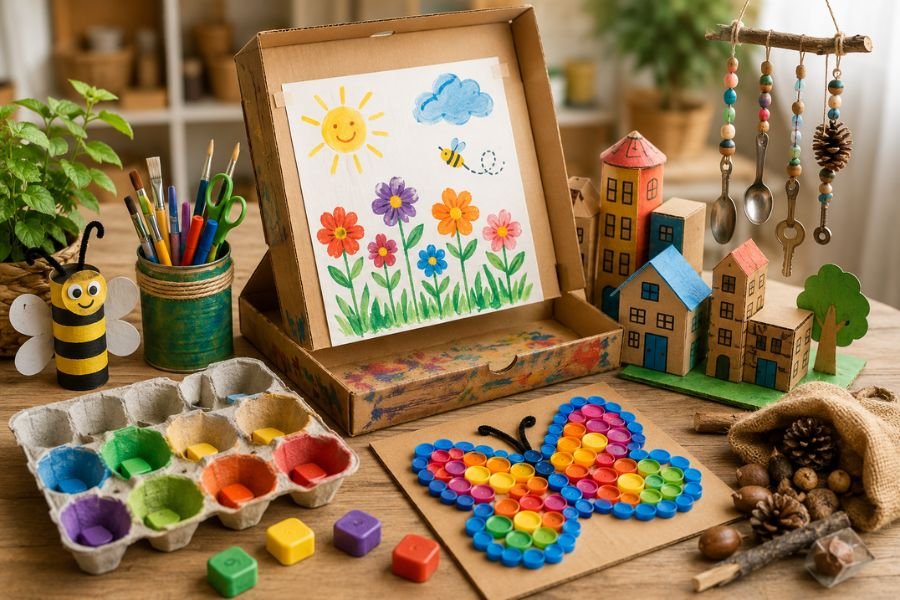
What if an empty egg crate became a colorful puzzle game?
What if an old pizza box transformed into an art easel?
What if the things we usually throw away were actually the beginning of something amazing?
At The Bee-Conomy, we believe creativity can bloom from the most unexpected places. Through our Sustainable Play initiatives and “Bee 4 You Trash It” programming, children learn that everyday items can be repurposed into imaginative, hands-on learning experiences that inspire curiosity, collaboration, and environmental awareness.
Creative reuse activities do more than reduce waste. They help children strengthen problem-solving skills, develop imagination, practice mindfulness, and build confidence as makers and creators. Instead of immediately tossing something into the trash, children begin asking an important question:
“What else could this become?”
That simple shift in thinking encourages innovation, environmental stewardship, and playful learning all at once.
Below are five fun and meaningful reuse activities families, classrooms, camps, and afterschool programs can try together.
Why Creative Reuse Matters
Children naturally love to build, explore, and experiment. Reuse activities encourage open-ended play where there is no single “right” answer. A cardboard tube can become a telescope, a spaceship, or even part of a marble maze. Bottle caps can become game pieces. Fabric scraps can become puppets.
These experiences support many of The Bee-Conomy’s 7 C’s principles including:
- Curiosity
- Collaboration
- Communication
- Creativity
- Community
- Compassion for the environment
The Bee-Conomy’s 7 C’s framework helps children practice life skills through meaningful experiences and playful exploration.
When children create with repurposed materials, they learn that resources have value and that imagination can transform ordinary things into something extraordinary.
1. Pizza Box Art Easel
One of our favorite Bee-Conomy activities is turning an old pizza box into a standing art easel.
What You’ll Need
- Empty pizza box
- Paints or markers
- Tape
- Paper
- Stickers or recycled decorations
How It Works
Open the pizza box upright and secure the lid so it stands vertically like a mini easel. Tape paper to the inside and let children paint, draw, or create collages.
Children can:
- Paint nature scenes
- Create community murals
- Make “Bee the Change” posters
- Practice storytelling through art
Skills Developed
- Fine motor skills
- Creative expression
- Focus and mindfulness
- Environmental awareness
This activity is a perfect example of “Repurpose, Retrieve, Reimagine,” a core principle featured throughout our sustainability programming.
2. Egg Crate Tetris Challenge
Who knew egg cartons could become a hands-on puzzle game?
Our Bee-Conomy Egg Crate Tetris activity transforms old egg cartons into colorful shape-matching and strategy games that support problem-solving and teamwork.
What You’ll Need
- Empty egg cartons
- Scissors
- Paint or markers
- Small recycled objects or blocks
How It Works
Cut egg cartons into different shapes and color-code them. Children can:
- Match pieces into patterns
- Race to complete puzzle boards
- Work in teams to build designs
- Create math and counting games
Why Kids Love It
The texture, colors, and hands-on nature make this activity feel like a real game while secretly reinforcing learning and collaboration.
Skills Developed
- Critical thinking
- Pattern recognition
- Teamwork
- Spatial awareness
3. Bottle Cap Mosaic Art
Instead of tossing plastic bottle caps into the trash, turn them into beautiful mosaic artwork.
What You’ll Need
- Clean bottle caps
- Cardboard
- Glue
- Paint or markers
Activity Ideas
Children can create:
- Flowers
- Animals
- Community murals
- Initials or names
- Nature-inspired art
This activity also opens the door to conversations about recycling and plastic waste in age-appropriate ways.
Skills Developed
- Patience
- Color recognition
- Planning and design
- Creative confidence
4. Cardboard City Builders
Large boxes and shipping materials can become entire imaginative worlds.
What You’ll Need
- Cardboard boxes
- Tape
- Markers
- Recycled paper
- Fabric scraps
Build Ideas
Kids can create:
- Mini cities
- Bee hives
- Libraries
- Schools
- Community centers
- Dream playgrounds
Encourage children to work together and assign roles such as:
- Architect
- Builder
- Decorator
- Storyteller
This collaborative activity reflects Bee-Conomy’s focus on communication, cooperation, and community-building through play-based learning.
5. Nature Treasure Wind Chimes
Creative reuse can also connect children back to nature.
What You’ll Need
- Old utensils or keys
- Sticks
- String
- Beads
- Nature items like leaves or pinecones
How It Works
Children assemble hanging wind chimes using reused materials mixed with outdoor treasures they collect safely from nature.
This activity encourages:
- Outdoor exploration
- Mindfulness
- Sensory awareness
- Appreciation for the environment
The final creations become beautiful reminders that old objects can still create something meaningful and joyful.
Turning Creativity Into Environmental Awareness
The goal of Sustainable Play is not simply crafting for fun — it’s helping children rethink their relationship with waste and consumption.
The Bee 4 You Trash It Campaign teaches children that even small actions can create big environmental impact. Through interactive workshops, games, and creative reuse experiences, students begin to see themselves as active contributors to a cleaner and more thoughtful world.
By combining:
- creativity,
- mindfulness,
- teamwork,
- and environmental stewardship,
children learn that they have the power to “Bee the Change.”
Simple Ways Families Can Start at Home
You do not need expensive supplies to begin.
Start a small “creative reuse bin” with:
- cardboard tubes,
- egg cartons,
- clean containers,
- bottle caps,
- scrap paper,
- and fabric pieces.
Before throwing something away, ask:
“Could this become part of a game, craft, or invention?”
That one question can spark hours of imaginative learning.
Final Thoughts
Children are naturally inventive when given the freedom to explore. Creative reuse activities help them see possibility where others see waste. They learn to create with intention, collaborate with others, and care for the world around them.
At The Bee-Conomy, we believe meaningful learning happens when imagination, play, and purpose come together. Through Sustainable Play and our “Bee 4 You Trash It” initiatives, we’re helping children discover that even the smallest ideas can create powerful change.
Because sometimes the most amazing creations begin with the things we almost threw away.