
Easy breathing exercises to help kids feel calm, focused, and ready to learn
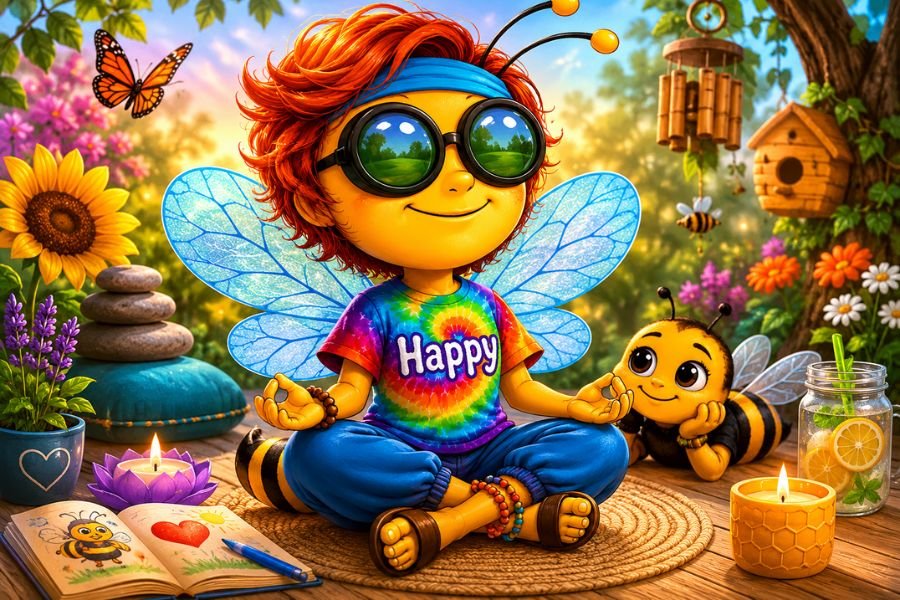
Featuring JusBee — The Bee-Conomy’s Resident Mindful Bee
Sometimes our thoughts buzz around so fast that it can feel hard to focus, listen, or stay calm. Maybe your body feels wiggly before school. Maybe your mind races during homework. Or maybe big feelings show up out of nowhere.
That’s where JusBee comes in. JusBee teaches children that mindfulness doesn’t mean being perfectly still or silent. It simply means slowing down long enough to notice how we feel, take a deep breath, and reconnect with ourselves.
In the Bee-Conomy, Connection is one of our important 7 C’s principles. JusBee helps children build connection with:
- Their thoughts
- Their feelings
- Their breath
- Their bodies
- The people around them
Just like bees pause on flowers during their journey, we can pause too.
Why Breathing Matters
When children are overwhelmed, excited, frustrated, or anxious, their bodies can feel “busy” on the inside. Deep breathing helps signal to the brain and body that it’s safe to slow down.
Mindful breathing can help children:
- Feel calmer during stressful moments
- Improve focus and attention
- Manage frustration and big emotions
- Prepare for learning or bedtime
- Build emotional awareness
- Reset after conflict or overstimulation
The best part?
Your breath is always with you.
JusBee’s Bee Breathing Exercises
1. Bumble Bee Breaths
Best for: Calming the body and relaxing after a busy moment.
How To Do It:
- Sit comfortably.
- Take a deep breath in through your nose.
- As you slowly breathe out, make a soft humming sound like a bee:
“Buzzzzzzzzz…”
- Repeat 3–5 times.
Why Kids Love It:
The humming vibration feels silly, calming, and fun all at once.
JusBee Says:
“Sometimes slowing down sounds a little buzzy.”
2. Flower & Bee Breathing
Best for: Younger children and classroom transitions.
How To Do It:
- Pretend one hand is a flower.
- Pretend the other hand is a bee.
- Smell the flower slowly:
Deep breath in…
- Let the bee fly away slowly:
Long breath out…
- Repeat together several times.
Bonus Idea:
Children can gently move their “bee” hand around while breathing.
3. Cloud Watching Breath
Best for: Rest time, anxiety, or emotional reset moments.
How To Do It:
- Close your eyes or look upward.
- Imagine thoughts floating by like clouds.
- Breathe slowly in for 4 seconds.
- Slowly breathe out for 4 seconds.
- Picture each breath helping clouds drift peacefully across the sky.
Reflection Prompt:
“What kind of cloud are your feelings today?”
4. Rainbow Breathing
Best for: Focus and emotional regulation.
How To Do It:
- Trace an imaginary rainbow in the air with your finger.
- Breathe in as your finger moves upward.
- Breathe out as it moves downward.
- Continue across the rainbow colors.
Add-On:
Children can name calming colors or emotions while tracing.
Creating a Mindful Hive at Home or School
Mindfulness works best when it becomes part of everyday routines instead of something children only use when upset.
Try adding Bee Breathing:
- Before homework
- During classroom transitions
- Before bedtime
- After recess
- During morning meetings
- Before tests or presentations
- After disagreements or emotional moments
Even one mindful minute can make a difference.
JusBee’s Mindful Reminder
JusBee reminds us that feelings are not “bad” — they are messages. When we pause and breathe, we give ourselves time to understand what our bodies and emotions are trying to tell us.
In the Bee-Conomy, mindfulness helps children learn one very important lesson:
You can feel big emotions and still find your calm.
And just like bees work together to keep the hive healthy, we can help each other create calmer, kinder spaces too.
Try This Together
Tonight or tomorrow, ask your child:
“What does your breathing sound like today?”
- A sleepy bee?
- A speedy bee?
- A calm floating bee?
- A buzzing, excited bee?
Sometimes naming our feelings is the first step toward understanding them.
Bee-Conomy Connection
This activity supports the Bee-Conomy 7 C’s principle of Connection — helping children connect with themselves, their emotions, and the world around them.