
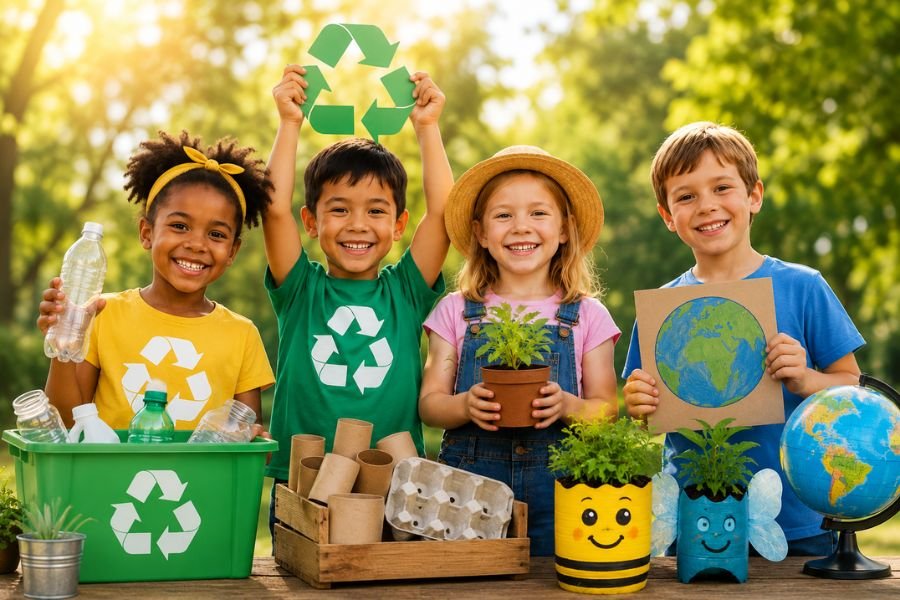
Simple, meaningful actions children can take every day to protect our Earth
At The Bee-Conomy, we believe even the smallest actions can create a big buzz of change. Through our Sustainable Play initiatives and programs like the “Bee 4 You Trash It” campaign, children learn that caring for the Earth can be creative, exciting, and fun.
Helping the planet doesn’t have to feel overwhelming. In fact, some of the most powerful habits begin with small everyday choices. Whether at home, at school, or in the community, kids can become Earth helpers one thoughtful action at a time.
Here are five fun ways children can make a positive impact on the world around them.
1. Turn Trash Into Treasure
Before throwing something away, ask:
“Can this become something new?”
Old cardboard boxes can become castles. Egg cartons can become art projects. Plastic bottles can become planters or bird feeders. Teaching children to repurpose materials encourages creativity while helping reduce waste.
At Bee-Conomy, we call this:
Repurpose. Retrieve. Reimagine.
Try This:
- Create a robot using recycled materials
- Paint on old pizza boxes
- Make an “eco-instrument” from containers and beans
- Build a sculpture from clean recyclables
Children quickly learn that “trash” can still have value.
Become a Recycling Detective
2. Become a Recycling Detective
Sorting recycling can feel like a game when kids become “Recycling Detectives.”
Challenge children to identify:
- Paper
- Plastic
- Glass
- Metal
- Compostable items
You can even create labeled bins with colors or fun drawings to make sorting easier for younger learners.
Bee Tip:
Ask children:
“Where SHOULD this go?”
That simple question builds mindfulness and environmental awareness in a fun, memorable way.
3. Help Clean Up Your Community
One small cleanup can make a huge difference.
Whether it’s a playground, sidewalk, classroom, or park, children learn responsibility and pride when they help care for shared spaces.
Make It Fun:
- Wear gloves and become an “Earth Hero Team”
- Set a timer and see how much litter can be collected
- Turn cleanup into a scavenger hunt
- Reward teamwork with stickers or certificates
Community cleanups also help children understand that protecting the environment is something we do together.
At Bee-Conomy, we teach that strong communities are built through:
- Cooperation
- Collaboration
- Community
4. Save Water and Energy
Kids can become “Planet Protectors” right at home.
Simple habits matter:
- Turning off lights
- Shutting off water while brushing teeth
- Using reusable bottles
- Taking shorter showers
- Unplugging devices when not in use
These little choices teach children that caring for the Earth happens every single day — not just on Earth Day.
Family Challenge:
Create a weekly “Bee the Change” chart where kids track:
- Lights turned off
- Recycling completed
- Water saved
- Outdoor playtime instead of screen time
5. Plant Something and Watch It Grow
Children develop a natural connection to the environment when they help something grow.
It could be:
- Flowers
- Herbs
- Tomatoes
- Wildflowers for pollinators
- A small classroom garden
Gardening teaches:
- Patience
- Responsibility
- Curiosity
- Compassion for living things
It also helps children understand how bees, plants, water, sunlight, and people all work together in one connected ecosystem.
Why These Small Actions Matter
When children feel empowered, they begin to see themselves as helpers, leaders, and changemakers.
That’s one of the core ideas behind The Bee-Conomy’s 7 C’s framework:
- Curiosity
- Compassion
- Communication
- Connection
- Cooperation
- Collaboration
- Community
Environmental learning becomes even more powerful when it is:
- Hands-on
- Play-based
- Creative
- Community-centered
Children don’t just learn about the world —
they learn they can positively shape it.
Bee the Change
Every recycled bottle, every cleaned-up park, and every reused cardboard box matters.
Big change often begins with small hands, big hearts, and a little imagination.
At The Bee-Conomy, we’re helping children discover that protecting the planet isn’t just important —
it can also be joyful, creative, and full of purpose. 🌼